
If you are new to strength training, two full-body sessions each week are a solid place to start. Use a small group of exercises that train the major muscle groups, choose loads you can move with control and repeat those exercises long enough to learn them.
That is enough structure for a beginner. A six-day split is not required. Neither are advanced barbell lifts, training to failure or a different workout every time you enter the gym.
The latest American College of Sports Medicine position stand on resistance training supports progressive resistance training at least twice weekly. World Health Organization physical activity guidance also recommends muscle-strengthening activity for all major muscle groups on two or more days each week.
What strength training actually means
Strength training, also called resistance training, means making your muscles produce force against resistance. That resistance might come from a dumbbell, a machine, a cable, a resistance band or your own body weight.
A leg press counts. So does a goblet squat. A chest-press machine, push-up, seated row and resistance-band row are all strength exercises.
Both machines and free weights can work. For a beginner, a more useful question is whether you can set up the exercise properly, move through a comfortable range and repeat the movement without losing control as the set gets harder.
Do women need a different strength-training program?
Healthy female beginners usually do not need a separate training rulebook solely on account of being female.
A systematic review and meta-analysis comparing women and men found similar relative increases in muscle size and lower-body strength when both followed resistance-training programs. Women had a larger relative increase in upper-body strength in that analysis, but both sexes responded well to the same basic resistance-training principles.
A 2026 meta-analysis of resistance training in women covering 126 studies and 4,019 women found meaningful strength gains in both premenopausal and postmenopausal women. The strength response did not differ significantly between those groups.
Individual circumstances still matter. Pregnancy, recent childbirth, osteoporosis, injury history, pain and some medical conditions can change exercise selection or loading. Your training history, available equipment and goals matter too.
What can women gain from strength training?
The clearest benefit is strength itself.
A female-only systematic review and meta-analysis of resistance training found substantial improvements in upper- and lower-body strength. It also found increases in muscle size.
The ACSM evidence review also reports improvements in measures of physical function, including chair-stand performance, gait speed, balance and timed-up-and-go performance.
Resistance exercise can support bone health. The National Institute of Arthritis and Musculoskeletal and Skin Diseases guidance on exercise and bone health includes resistance exercise among the activities that load bones and help maintain bone strength.
There is also evidence in postmenopausal women. A 2025 meta-analysis of resistance training and bone mineral density covering 17 randomized controlled trials found improvements at the lumbar spine, femoral neck and total hip. Results varied considerably between studies at some skeletal sites, so the findings should not be read as a precise prescription for every woman.
Strength work does not replace aerobic activity. WHO guidance recommends both aerobic activity and muscle-strengthening work.
How to start your first strength workout
Your first session should help you learn the exercises and find sensible starting loads. It is not a strength test.
Use this process when trying an exercise for the first time:
- Start lighter than you think you need.
- Perform a few comfortable reps to learn the setup and movement.
- Add a small amount of resistance if the load feels very easy.
- Once the set feels challenging and your technique remains stable, use that load for your working sets.
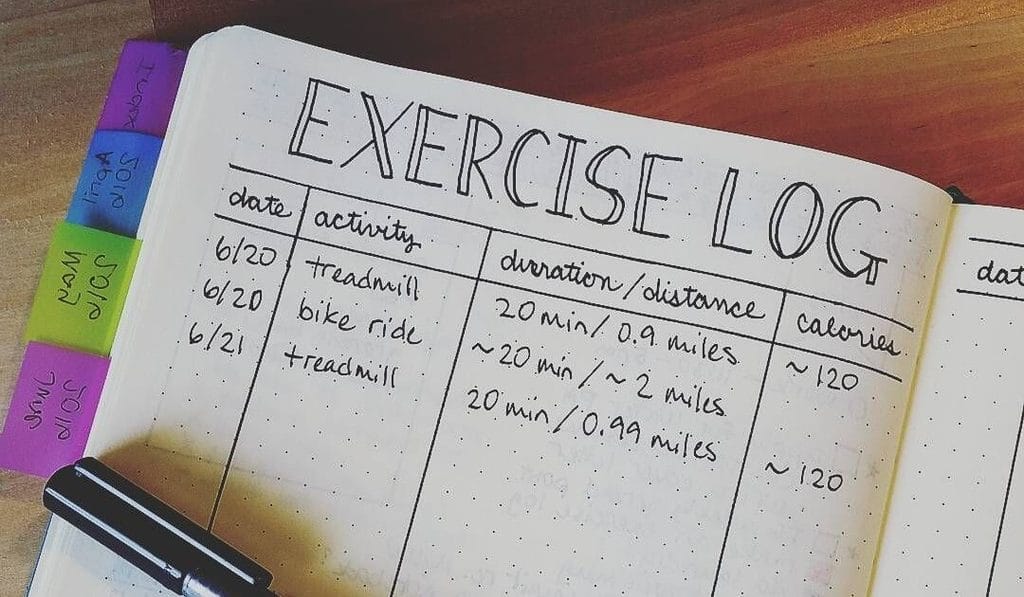
- Record the weight, reps and machine setting after the session.
A simple entry is enough: Leg press: 40 kg, seat setting 3, 12 reps, 11 reps. At your next session, use the same setup and see whether you can add a rep while keeping the movement controlled.
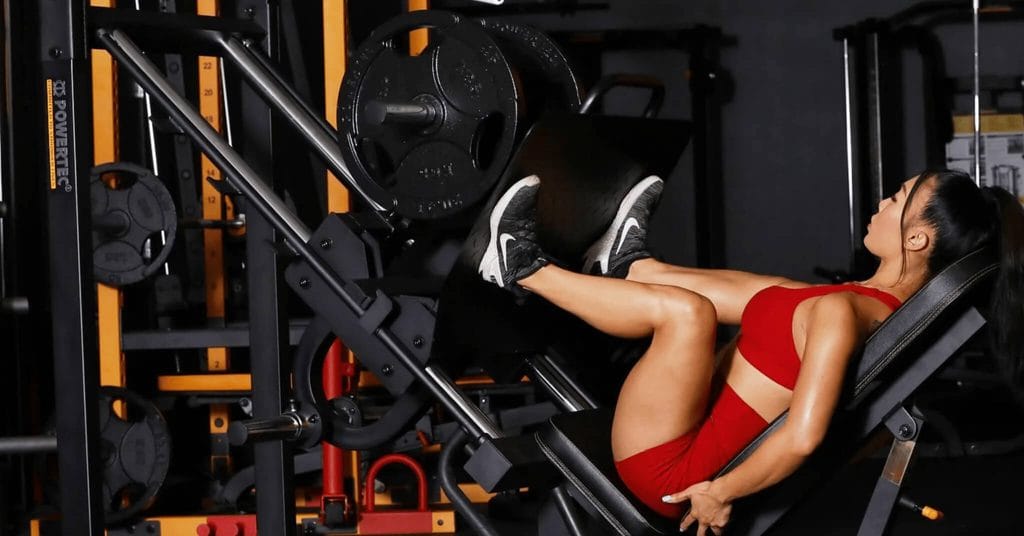
On a machine, take a moment to adjust the seat, back pad or handles before loading the exercise. You should be able to move through a comfortable range without reaching, twisting or shifting position to finish each rep.
With free weights, watch what happens as the set gets harder. If you suddenly need a lot of momentum, cut the range of motion sharply or lose the setup you used on the earlier reps, the load may be too heavy for that set.
What about warming up?
For this beginner session, keep the warm-up simple.
A few minutes of easy movement can help you feel ready. Then use one or more lighter practice sets before an exercise that is new to you or uses more resistance.
Those practice reps rehearse the movement and help you judge the working weight before the harder sets begin.
A simple 2-day beginner strength program
This sample routine is meant to teach basic resistance-training skills and begin building general strength. It is not designed to maximize one-repetition maximum strength or muscle growth.
Use the same session twice a week for the first few weeks. In this example, repetition is intentional. It gives you more chances to learn each setup and makes it easier to see whether your performance is improving.
A rep, short for repetition, is one complete performance of an exercise. A set is a group of reps performed before you stop and rest. If you perform 10 goblet squats, rest, then perform another 10, you have completed two sets of 10 reps.
| Exercise | Working sets | Reps | Rest |
|---|---|---|---|
| Leg press or goblet squat | 2 | 8-12 | About 1-2 minutes |
| Dumbbell Romanian deadlift | 2 | 8-12 | About 1-2 minutes |
| Machine or dumbbell chest press | 2 | 8-12 | About 1-2 minutes |
| Seated cable row | 2 | 8-12 | About 1-2 minutes |
| Lat pulldown | 2 | 8-12 | About 1-2 minutes |
| Farmer’s walk or dead bug | 2 | 20-30 seconds or 6-10 reps per side | About 1 minute |
Two sets and a moderate rep range keep the session manageable while you learn the exercises. They are choices for this program, not magic numbers.
A large systematic review and network meta-analysis of resistance-training prescriptions found that muscle growth can occur across a range of training loads. Heavier loads have a clearer advantage when maximal strength is the goal.
Rest periods work the same way. One to two minutes is a workable default here, not a universal optimum.
A systematic review of rest periods in resistance training found that 60 to 120 seconds could support strength gains in untrained adults. Most of the participants were men, so the evidence is not particularly strong for making a women-specific rest prescription. Longer rest is fine when you need it, especially after demanding lower-body sets.
How hard should each set feel?
A working set should require effort. It does not need to end with a failed repetition.
Current ACSM guidance found no consistent advantage from taking resistance-training sets to momentary muscular failure.
A 2024 meta-regression examining proximity to failure found that strength gains appear possible across a fairly wide range of effort levels. Muscle growth may increase when sets finish closer to failure, but researchers cannot yet identify one exact repetitions-in-reserve target that works best for everyone.
For the first few weeks, stopping while another clean rep or two still seems possible is a practical coaching rule. It is not a scientific cutoff.
A beginner needs time to learn what a challenging set feels like without turning every exercise into a maximum-effort test.
How to know when to add weight
Progressive resistance training means the work becomes harder over time. That increase does not have to happen at every workout.
One simple method is to use a rep range.
Suppose you perform the seated row for two sets of eight to 12 reps with 15 kilograms.
Your first session might look like this:
- Set 1: 10 reps
- Set 2: 9 reps
Keep the same load at the next session and try to add a rep where you can.
Over several workouts, you might reach:
- Set 1: 12 reps
- Set 2: 12 reps
If those reps remain controlled, move to the next small weight increase and work upward through the range again.
What if the next machine plate or dumbbell jump feels too large?
Stay at the current load and build more reps first. Another option is to use the heavier load for the first set and return to the lighter weight for the second.
This approach is often called double progression. It is one way to organize progression, not the only one.
The routine does not automatically expire after four weeks. Keep using it while the exercises suit you and your performance is still moving forward. Later, you might add another training day, increase the number of sets or change some exercises when your goals or training needs call for it.
Machines or free weights?
You can use both.
A 2023 systematic review and meta-analysis comparing free weights and machines found no meaningful overall difference between the two for muscle growth. Strength gains tended to be specific to the way people trained. Free-weight training produced larger improvements on free-weight strength tests, while machine training favored machine-based strength tests.
Machines can be handy during the first few weeks in a gym. The movement path is constrained, and changing the resistance is usually quick.
Free weights offer more exercise choices and require you to control the load through space.
There is no reason a beginner routine has to belong to one camp. A session might contain a leg press, dumbbell Romanian deadlift, chest-press machine and cable row.
A barbell squat may look more advanced, but that does not make the leg press a lesser exercise. If the leg press gives you a stable way to train your legs while you are still learning other movements, it has a clear purpose.
Will lifting weights make women bulky?
Strength training can increase muscle size in women. The female-only meta-analysis cited earlier found measurable muscle growth following resistance training.
What it does not do is create a dramatic amount of muscle after a handful of beginner workouts. Changes in muscle size develop over repeated training, and the response differs from person to person.
Research comparing women and men finds similar relative muscle-growth responses when they follow the same resistance-training programs.
Building a large amount of muscle is a training goal that takes sustained work. Starting two beginner strength sessions each week does not commit you to pursuing that goal.
Soreness, effort and pain are not the same thing
A new exercise or an unusually hard session may leave you sore later. That soreness is not a score for how effective the workout was.
A peer-reviewed review of muscle damage and muscle growth found that exercise-induced muscle damage is not required for hypertrophy. Trying to make yourself sore is therefore a poor way to judge whether a program is working.
During a hard set, muscular effort and fatigue are expected. Pain is harder to classify with one simple rule.
A sharp sensation, pain that continues to worsen, pain accompanied by swelling or loss of function, or pain that persists outside training deserves more attention than ordinary muscular fatigue.
An online exercise guide cannot diagnose an injury. Stop the movement if something feels concerning and seek appropriate professional assessment when symptoms persist or interfere with normal movement.
When a generic beginner program is not enough
This sample routine is written for healthy adults.
Pregnancy itself does not rule out resistance exercise. American College of Obstetricians and Gynecologists guidance on exercise during pregnancy states that physical activity is safe and desirable for most uncomplicated pregnancies and that women with uncomplicated pregnancies can perform strength-conditioning exercise. Some routines need modification as pregnancy progresses or when medical or obstetric complications are present.
After childbirth, return to exercise depends partly on the type of delivery, recovery and any complications. ACOG guidance on exercise after pregnancy notes that some women can resume activity within days after an uncomplicated vaginal birth, while a cesarean birth or complications may call for individualized guidance.
Women with osteoporosis or low bone density should discuss suitable exercise choices with a health care professional.
Known cardiovascular, metabolic or renal disease, or new symptoms that may point to one of those conditions, can also change whether medical clearance is appropriate before increasing exercise intensity. ACSM guidance on preparticipation health screening bases that decision on current activity level, known disease, symptoms and the intensity of exercise being considered.
FAQ
How many days a week should a beginner woman lift weights?
Two full-body sessions are a practical starting point for most healthy beginners.
WHO recommends muscle-strengthening activity for all major muscle groups on two or more days each week. Current ACSM guidance also supports resistance training at least twice weekly.
A third day can work too. It is an option, not a required next step.
Is 30 minutes of strength training enough?
It can be.
A focused 30-minute session can contain useful resistance training, especially when the exercise list is short. Thirty minutes is not a universal threshold for building strength or muscle.
The six-exercise session in this article may take longer once practice sets, machine adjustments and rest periods are included.
Can I start strength training at home?
Yes.
Bodyweight exercises, resistance bands and dumbbells can all provide resistance. The ACSM evidence review found improvements from home-based and elastic-band resistance training.
As you get stronger, the exercise still needs to challenge you. You might add resistance, perform more reps, change your body position or move to a harder exercise variation.
Should women lift light or heavy weights?
Neither word means much without context.
A wide range of loads can build muscle. Heavier loading has a clearer advantage when maximal strength is the goal.
For a beginner, a moderate load is often a practical place to learn an exercise. It should feel challenging by the end of the set without forcing you to turn every rep into a struggle.
Sources
- American College of Sports Medicine, Resistance Training Prescription for Muscle Function, Hypertrophy, and Physical Performance in Healthy Adults, 2026
- Roberts, Nuckols and Krieger, Sex Differences in Resistance Training: A Systematic Review and Meta-Analysis, 2020
- It’s Never Too Late: The Impact of Resistance Training on Strength and Body Composition in Females Across the Lifespan, 2026
- Hagstrom et al., The Effect of Resistance Training in Women on Dynamic Strength and Muscular Hypertrophy, 2020
- Currier et al., Resistance Training Prescription for Muscle Strength and Hypertrophy in Healthy Adults, 2023
- Haugen et al., Effect of Free-Weight vs. Machine-Based Strength Training, 2023
- Robinson et al., Resistance Training Proximity to Failure, Strength Gain, and Muscle Hypertrophy, 2024
- World Health Organization, Physical Activity
- National Institute of Arthritis and Musculoskeletal and Skin Diseases, Exercise for Your Bone Health
- American College of Obstetricians and Gynecologists, Physical Activity and Exercise During Pregnancy and the Postpartum Period
Start with guidance, not guesswork.
Visit BARBELLE by J.Lara, meet our female coaches, and experience a ladies-only training space built around learning and progress.
Book your free trial